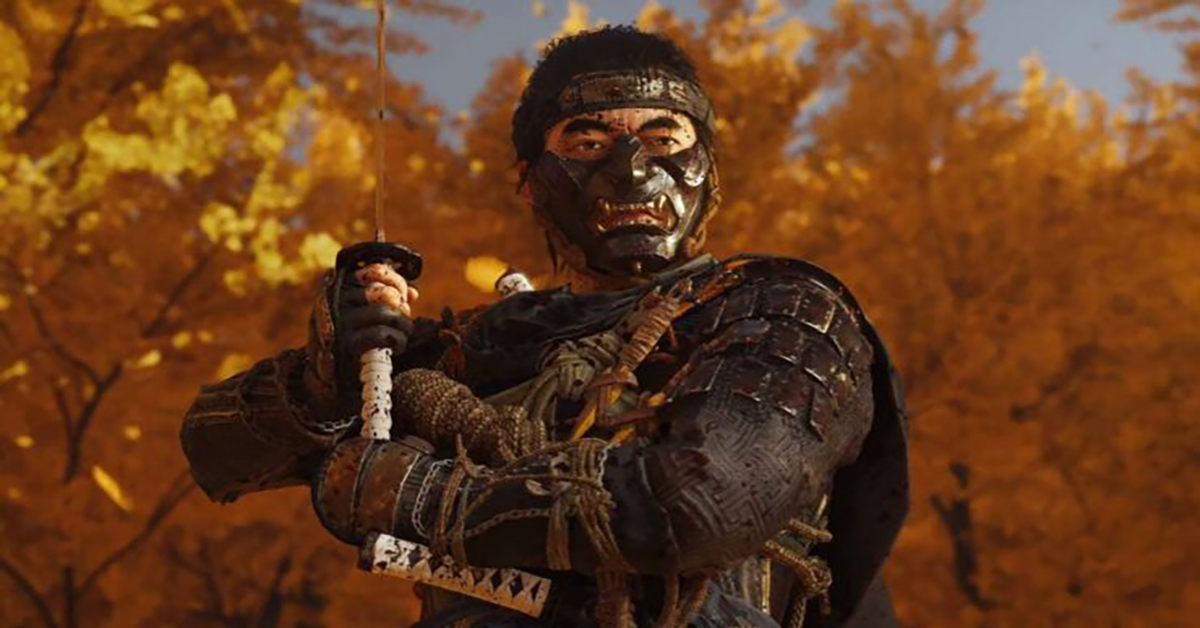
I ain’t scared of no ghost.
As the release date for Sucker Punch Productions’ newest IP drew closer, I eagerly anticipated playing the game that would seemingly fill the void left unanswered by Ubisoft’s Assassin’s Creed: Feudal Japan. The latter being something that fans of that franchise have long sought after, myself included. While Ghost of Tsushima has more than passing similarity to certain aspects of the Assassin’s Creed franchise, I felt it had more in common with modern Far Cry games overall.
Ghost of Tsushima and the Far Cry franchise heavily invest in side missions/tales that give exposition for the protagonist’s companions without having a major impact on the “golden path” story. The map in Ghost of Tsushima has a staggering amount of optional Mongol camps that give the player freedom in how they want to eliminate their enemies, much like Far Cry’s outposts. Once the enemies are eliminated in these camps, they become friendly to the player and tend to contain merchants within that can restock Jin’s ammunition or offer cosmetics for purchase. I could go on, but I’ll conclude my list of similarities between these two games by mentioning that you even craft upgrades for Jin’s carrying capacity of his arrows and other gear by hunting and looting skins of boar and dogs. Rest assured, there aren’t any radio towers for Jin to climb in order to clear the map’s fog of war.
Every Frame a Painting
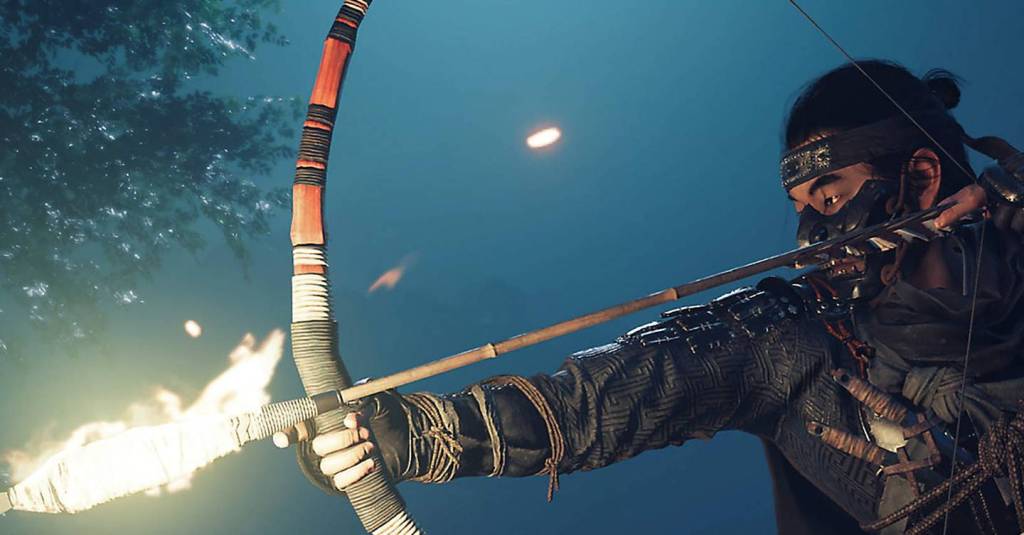
Even if I were to ignore every other aspect of Ghost of Tsushima, there’s so much to say about how beautiful this game is. This is the first time that I’ve been inspired to dive into a game’s Photo Mode since Horizon: Zero Dawn. Trust me, I’m not even good at creating works of art with the camera settings, I mostly just took pictures of the landscapes I caught in an impressive angle. The team at Sucker Punch truly found a way to make an open-world game, in an industry chock-full of open-world games, stand out by creating stunning and unique environments throughout each region of the map.
Ghost of Tsushima’s particle effects, for instance, the leaves and petals falling from trees, were impressive to say the least. When the review embargo lifted for Ghost of Tsushima, I was honestly concerned with how much the game was being compared to Breath of the Wild. Now that I’ve played the game for myself, I interpret that comparison with having the freedom to navigate the game’s map without needing a mini-map on screen. From the beginning of Jin’s story, I loved that I could discover camps whether they were hostile or friendly by looking for bonfire smoke on the horizon.
Variety Is The Spice Of…Video Games?
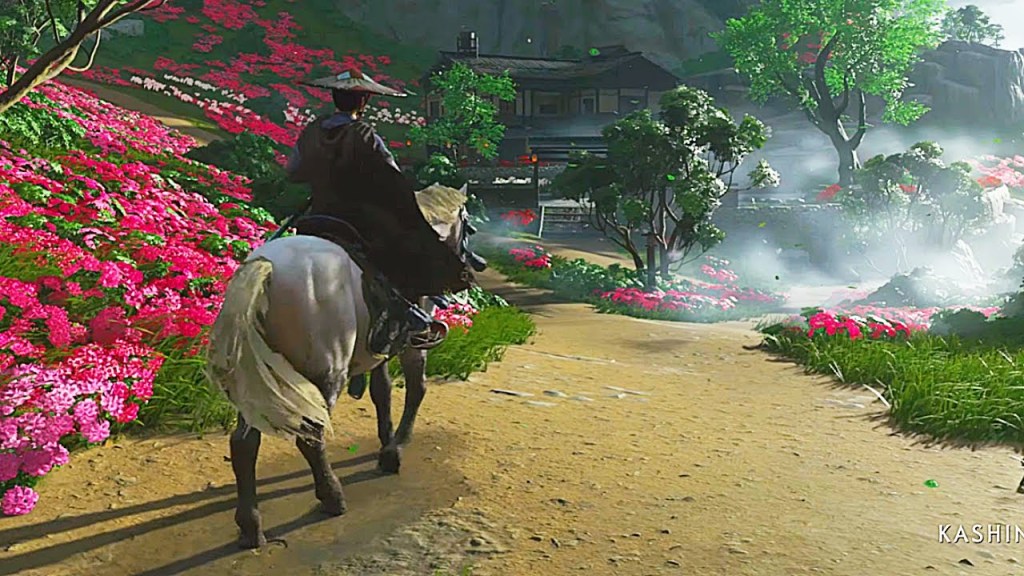
My main complaint of the game is that throughout my time playing, I found myself aware of just how repetitive the gameplay loop was. Trust me, I’m well aware that video games are largely repetitive in nature, especially in today’s industry where everyone wants to take a crack at the “game as a service” structure. My overall issue isn’t with Ghost of Tsushima having a repetitive gameplay loop, I just wish it was more varied to shake things up. For example, exploring Tsushima is a major chunk of the gameplay but there are only a handful of unique pieces of side content to encounter. These are limited to hot springs/onsens, bamboo strikes, fox dens, lighthouses, and Shinto shrines.
As previously mentioned, there are also Mongol camps, outposts, and captured farmsteads but these don’t differentiate themselves enough. The main difference between the enemy camps is the number of enemies and the number of objectives required to neutralize them. To summarize my point about the game’s repetition there are almost 50 fox dens scattered across Tsushima. I think it would have provided players with a breath of fresh air if Sucker Punch had diversified the side content just a little bit more and added one or two more types of discoverable content.
Fight With Honor and Innovation
Ghost of Tsushima’s combat is Souls-lite similar to God of War (2019) or Star Wars Jedi: Fallen Order where players want to focus on dodging and parrying enemies whilst simultaneously filling their stagger meter with heavy attacks. Where Ghost branches off and successfully innovates on the combat style is with stances that are learned from enemy leaders. This mechanic has the player adapting to the weapon style of individual enemies that Jin faces, these are swords, shields, spears, and brutes. Each of these stances has a skill tree that the player can explore to learn new light and heavy attack combos or increase stagger damage while using the respective stance.
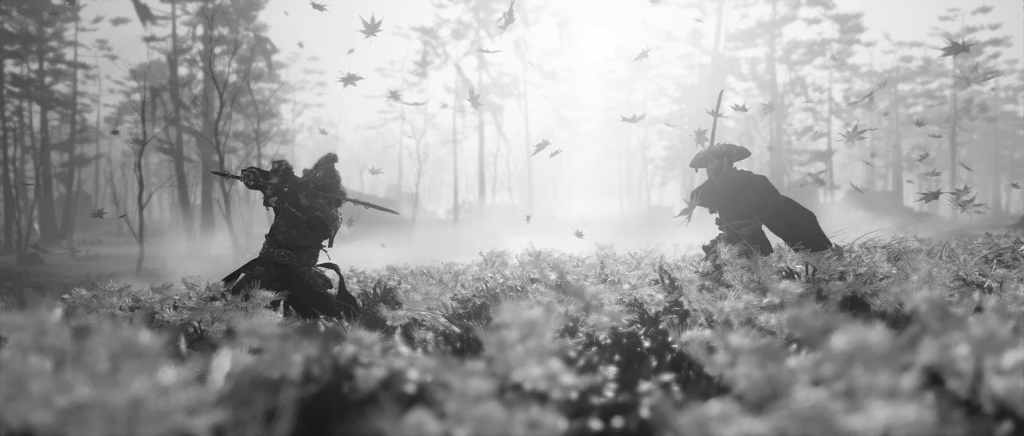
While the game’s combat can also start to feel rinse and repeat, it all pays off when you encounter the samurai duels sprinkled throughout the game. These are typically placed in gorgeous, set piece-like, environments and can be tense battles to the death on harder difficulties. There were only a few times that I didn’t feel like a badass heading into battle after the duel’s intro cutscene.
Conclusion: 8.5/10
Despite all of the criticisms that I’ve laid at its feet, I truly do believe that Ghost of Tsushima is a great game. In fact, I’d reckon that Sucker Punch has created one of the most well-polished open-world games of this generation. It’s without a doubt that I will be diving back into Ghost of Tsushima on PS5 just to see how the next-gen hardware improves the games already stunning visuals. While I’m personally hoping that we are able to get another Sucker Punch Infamous game, I can’t wait to see where the team takes the Ghost franchise in the future.
 LongLivePlay